AI Voice Agent for Multilingual Support: Arabic + English Guide for GCC Businesses
- Digwave AI
- Feb 21
- 9 min read

Why an AI Voice Agent for Multilingual Support Matters in the GCC
The UAE and the wider GCC run on a natural mix of Arabic and English. People switch between both languages in the same conversation without even thinking about it. You hear it everywhere, from clinics and real estate offices to e-commerce deliveries and hotel bookings. For customers, this blend feels normal. For businesses, it creates real pressure. Calls come in all day, and not every staff member can communicate confidently in both languages. This leads to delays, misunderstandings, and lost opportunities.
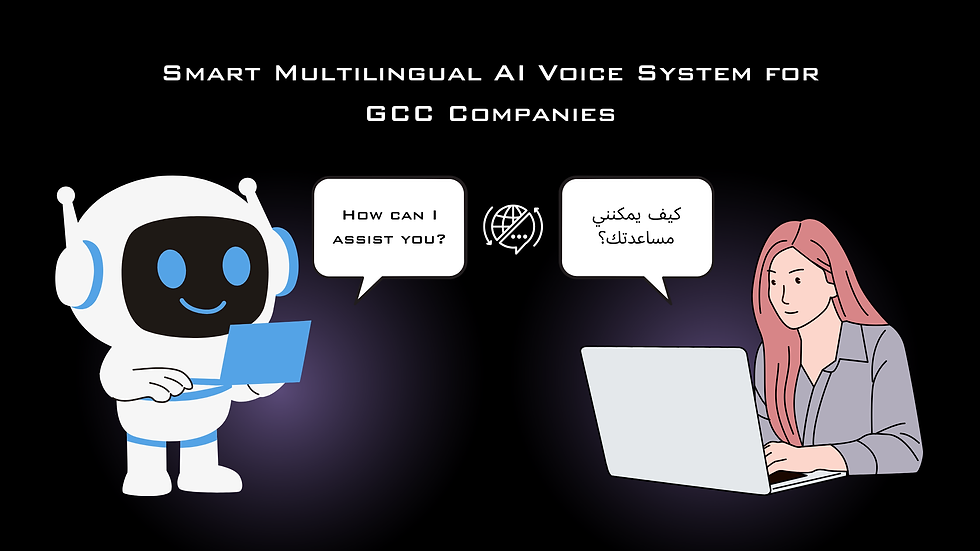
An AI Voice Agent for Multilingual Support solves this smoothly by understanding both languages, adapting instantly, and responding clearly every single time.
AI voice agents solve this problem in a simple but powerful way. They understand both languages, speak naturally, respond instantly, and never miss a call. Whether a customer wants clear English or warm Gulf-friendly Arabic, the AI adapts right away. It keeps the tone polite and consistent, which helps businesses sound professional every single time.
This guide breaks down how multilingual AI voice agents work, why they are becoming essential in the UAE and GCC, and how they help companies offer better service, save time, and increase revenue.
Why Multilingual Support Is Essential for UAE and GCC Businesses
The UAE and GCC are home to one of the most diverse populations in the world. Arabic is the heart of the region, but English is used everywhere in business, tourism, healthcare, real estate, hospitality, and retail. Customers often start a conversation in English for convenience, then switch to Arabic when they need clarity or feel more comfortable expressing details.
This creates a challenge for businesses. When a customer calls, they expect quick and accurate support in the language they prefer. If the agent on the line cannot communicate clearly, the caller becomes frustrated. Many end the call immediately and move to another business that can help without language barriers. Losing even a small percentage of these calls affects bookings, sales, and reputation.
Multilingual support does more than help communication. It builds trust. When customers feel understood, they stay on the call longer and are more willing to ask questions or complete a transaction. This trust is especially important in real estate, healthcare, financial services, and government sectors, where accuracy and clarity matter.
A bilingual AI voice agent removes this friction. It understands Arabic and English equally well, switches instantly, and adjusts to the caller’s needs. This makes it one of the most valuable tools for UAE and GCC businesses that want to grow and deliver reliable service.
Understanding AI Voice Agents and How They Handle Two Languages Smoothly
An AI voice agent acts like a smart virtual assistant that talks to customers over the phone. It listens, understands the question, and replies in a natural tone, just like a trained human agent. It can help with tasks such as booking appointments, answering common questions, checking availability, or gathering customer details.
In a multilingual region like the GCC, the AI becomes even more powerful. It can automatically detect whether the caller is speaking Arabic or English and respond in the same language without the caller pressing buttons or choosing from a menu. The conversation flows naturally, the way people in the UAE normally speak.
The technology behind it is simple for the business but advanced on the inside. The system converts voice to text, understands the meaning, prepares the right answer, and then speaks it back in perfect Arabic or English. Modern AI models are trained on Gulf dialects, regional accents, and everyday phrases used by expatriates. This makes the interaction smooth and comfortable for the caller.
Instead of waiting on hold or navigating long IVR menus, the customer speaks normally and gets real answers right away. This creates a better experience and reduces pressure on human staff.
Key Features of an Arabic + English AI Voice Agent
A multilingual AI voice agent built for the UAE and GCC must match the way people communicate here. It needs to understand language switches, cultural tone, and the mix of Arabic and English that happens in almost every call. These are the features that make it effective:
Real-time language detection:
The agent automatically recognizes whether the caller is speaking Arabic or English and replies in the same language without any delay. This keeps the conversation natural and effortless.
Natural Gulf-friendly accents:
Clear pronunciation and region-friendly tones help callers feel at ease. A voice that sounds familiar and polite builds trust quickly.
High accuracy with Arabic dialects:
Arabic includes many variations, especially across Gulf countries. The AI understands common dialects and mixed phrases such as Arabic-English blends, which makes conversations smoother.
Conversation memory:
The system remembers key details from earlier in the call. It does not repeat unnecessary questions and keeps the conversation focused, just like a well-trained human agent.
Automated actions:
The AI can do more than talk. It can book appointments, collect information, check calendars, qualify leads, answer FAQs, and process real tasks while on the call.
CRM and tool integration:
Caller details, leads, and booking data can flow directly into tools like HubSpot, Zoho, Google Sheets, WhatsApp, or email, which reduces manual work for staff.
Instant, polite replies:
The AI responds immediately and keeps the tone friendly and respectful in both Arabic and English. This consistency helps businesses deliver a professional experience every time.
Together, these features make the AI voice agent a reliable, always-on support tool that fits perfectly with UAE and GCC customer expectations.
Industry Use Cases for Multilingual AI Voice Agents in the UAE and GCC
Multilingual AI voice agents are now becoming essential across many industries in the UAE and GCC. The ability to switch between Arabic and English instantly makes them a perfect fit for the region’s diverse customer base. Here are the sectors that benefit the most:
1. Healthcare and clinics:
Patients often call in Arabic to explain symptoms or book consultations. The AI can check doctor availability, answer common questions, and confirm appointments without delays.
2. Real estate:
Brokers receive constant calls from buyers, tenants, and investors. The AI can qualify leads, share property details, schedule viewings, and follow up automatically. This helps agents focus on serious clients.
3. E-commerce and delivery:
Customers frequently ask about order status, delivery times, or product availability. The AI handles these routine queries in both languages, reducing pressure on support teams.
4. Government services:
Residents often prefer Arabic, while expatriates use English. AI agents help both groups get fast information about procedures, requirements, and service timings.
5. Hospitality and tourism:
Hotels and travel companies deal with high call volumes. The AI can answer booking queries, check room availability, and provide travel information around the clock.
6. Education and training centres:
Parents and students commonly switch between languages when asking about admissions, fees, and schedules. AI ensures every caller gets clear and accurate information.
7. Financial services:
Banks and insurance companies use AI to handle inquiries, lead generation, policy details, and callback requests.
Across all these industries, the AI voice agent reduces waiting time, improves accuracy, and delivers a familiar bilingual experience that meets the expectations of UAE and GCC customers.
How AI Voice Agents Improve Customer Experience
A smooth customer experience starts with fast, accurate communication. When someone calls a business, they want a clear answer without waiting or repeating themselves. A multilingual AI voice agent makes this possible from the very first interaction.
The AI responds instantly. There are no queues, no busy lines, and no long holds. It understands what the caller needs, gives accurate information, and stays consistent through the entire conversation. The tone remains friendly, polite, and culturally aligned in both Arabic and English.
Because the system understands both languages equally well, callers feel heard and respected, no matter which language they choose. This avoids the awkward moments where a customer has to switch languages or explain themselves twice. Instead, the conversation feels natural, and the caller gets what they need quickly.
Here’s how the customer experience improves:
Faster and clearer communication
No waiting or follow-up calls needed
Smooth language switching
Accurate answers without confusion
A polite and consistent tone every time
For businesses, this leads to more completed bookings, fewer dropped calls, and stronger trust with customers. When calls are handled well, customers are more likely to return and recommend the business to others.
Technical Advantages: Why Businesses Prefer AI Over Traditional Call Centres
Traditional call centres come with high costs and constant challenges. Teams need training, managers, supervision, and regular performance checks. During peak seasons, call volumes can become overwhelming, which leads to long waiting times and frustrated customers.
AI voice agents offer a simpler and more efficient solution. Once the setup is complete, the system does not require further training. It can handle unlimited calls at the same time, which is ideal for busy clinics, real estate offices, e-commerce stores, or any business that experiences high call traffic.
The AI also connects easily with tools like CRM systems, booking calendars, and communication platforms. This reduces the amount of manual work for staff and makes operations smoother. Businesses get access to real-time analytics, call summaries, customer insights, and performance reports, all without extra effort.
Key technical advantages include:
Unlimited call handling at the same time
No ongoing training or supervision needed
Smooth CRM and scheduling integrations
Instant access to analytics and call insights
Lower operational costs compared to call centres
The result is a system that runs faster, costs less, and helps businesses scale without hiring more staff. It gives companies a modern, reliable way to manage customer communication.
Challenges in Arabic Language AI and How Modern Systems Solve Them
Arabic is one of the richest and most complex languages in the world. It has many dialects, each with its own pronunciation, vocabulary, and rhythm. Even within the Gulf region, the way someone speaks in Dubai can differ from how someone speaks in Riyadh or Muscat. To make things even more interesting, people often mix Arabic and English in the same sentence. A caller might say, “I want an appointment bukra morning,” and expect the listener to understand the full meaning instantly.
Older AI systems struggled with this mix. They often misheard words, ignored dialect differences, or misunderstood context. This led to inaccurate responses and a frustrating experience for the caller.
Modern AI has changed that. Today’s systems are trained on thousands of hours of real Arabic conversations, including Gulf dialects and common mixed-language phrases. They learn how people naturally switch between languages and how regional accents affect pronunciation.
With better context understanding, improved speech recognition, and adaptive learning, the AI now responds more naturally and accurately. The more interactions it handles, the smarter it becomes, continuously improving its ability to understand local speech patterns. This makes modern multilingual AI a strong fit for UAE and GCC communication.
How UAE Businesses Can Implement a Multilingual AI Voice Agent
Setting up a multilingual AI voice agent is simpler than most businesses expect. The process is straightforward and can be completed within days. Here’s how it usually works:
Define the goal. Decide whether you want the AI to handle appointment booking, lead qualification, customer support, or general inquiries.
Map the workflows. Choose the tasks, questions, and conversation paths the AI should handle.
Provide sample questions. Share examples in Arabic and English so the AI learns the common phrases your customers use.
Connect your tools. Integrate CRM systems, calendars, WhatsApp, or other platforms your team relies on.
Test with real calls. Make test calls in both languages to refine responses and ensure accuracy.
Go live. Launch the system and monitor calls for the first week to fine-tune performance.
Most UAE and GCC businesses start seeing benefits right away. Customers get quicker responses, and the internal workload drops almost immediately.
Real Results: What Businesses Typically See After Using AI Voice Agents
Businesses that shift to multilingual AI voice agents often notice results within the first few days. Call response times improve instantly because the AI answers without delay. Customers feel more respected and understood, which leads to higher satisfaction and fewer complaints. Missed calls disappear, since the AI handles every incoming request at any hour.
Different industries see different outcomes. Clinics report more appointment bookings. Real estate companies receive better-qualified leads. E-commerce brands see a drop in repetitive support calls. Across all sectors, conversations become clearer and more efficient.
Operational costs also go down. The AI manages routine tasks and frees staff to focus on complex issues that truly need human attention. This improves team productivity and reduces the need for large support teams.
In the end, businesses get a reliable, always-available communication system that delivers consistent service in both Arabic and English. It strengthens trust, boosts conversions, and supports long-term growth.
Conclusion
Multilingual AI voice agents are becoming essential for businesses in the UAE and GCC. They answer instantly, switch smoothly between Arabic and English, and handle tasks like booking and support without missing any calls. This creates a better experience for customers and reduces the workload on your team.
Companies that use AI voice agents notice quick improvements. More bookings get confirmed, fewer calls are lost, and conversations feel clearer and more natural. Customers appreciate being understood in their preferred language, which builds trust and increases conversions.
If you want to strengthen your customer service and make your operations smoother, introducing a bilingual AI voice agent is a smart next step. If you need help creating one that fits your business perfectly, I’m ready to guide you.
FAQ Multilingual AI Voice Agent for UAE Businesses
How does a multilingual AI voice agent switch between Arabic and English?
Modern AI detects the language automatically as soon as the caller speaks. It listens to pronunciation, keywords, and sentence structure, then replies instantly in the same language without the caller choosing any options.
Can the AI understand Gulf Arabic dialects?
Yes. Advanced AI voice agents are trained on Gulf dialects and common mixed phrases used in daily conversations. This helps the AI understand callers naturally, even when they use regional accents or mix Arabic and English.
What tasks can an AI voice agent handle for my business?
It can book appointments, qualify leads, answer FAQs, check schedules, collect customer details, and sync information with CRM tools like HubSpot, Zoho, and Google Sheets.
Do AI voice agents reduce the need for a call centre?
They can significantly reduce call volume by handling routine inquiries and tasks. Human staff can then focus on complex cases, improving overall efficiency and reducing operational costs.
How long does it take to set up a bilingual AI voice agent?
Most businesses in the UAE and GCC can launch within a few days. After defining goals, providing sample questions, and integrating tools, the AI can go live and start handling real calls almost immediately.


Comments